
Part A: Introduction

My name is Diyala Mawad, I am 20 years old and I am a child of four. I was born in Syria and came to the United States when I was three years old. Although I was born in Syria, I have my US citizenship. I am fluent in speaking both Arabic and English, but however, I do not know how to write or read Arabic. I enjoy cooking, listening to music, teaching young children and spending quality time with my family and friends. I am majoring in Early Childhood Education and Psychology. I have been working with children ever since I was a child myself. I would always enjoy teaching my younger siblings their homework as soon as they get home from school. My passion for children grew bigger when I started volunteering at an Arab -American Association at the age of 16. There, I helped children who were new to America and did not understand English really well, with their homework. From there, I knew that working with children is what I want to do when I get older. Right after, I decided to declare Early Childhood as my major, along with psychology. I enjoy watching young children grow and experience things for the first time. The reaction and excitement that I witness on a child’s face when they see or learn something fascinating for the first time are astonishing and extremely rewarding.
As of right now, I work as an after-school teacher for a first-grade classroom. On the weekends, I volunteer for a pediatric speech pathologist at NYU Lutheran Hospital. Over there, I get to witness how the speech pathologist deals and help children who struggle with their speech. Some of these children walk in not knowing how to talk or move their tongue, and it is extremely rewarding when watching them overcome their struggles. In the future, I hope to be a certified teacher and receive a masters in speech pathology.

Hello! My name is Yoleiry Quezada. I am 21 years old. I was born and raised in New York and my parents are Dominican. Therefore, I can fluently speak and write Spanish and English. I live in Inwood, Manhattan. My major is psychology with a focus study in anthropology culture. I am a senior pursuing to graduate at the end of summer 2019. After graduation, I plan on applying for my master’s degree in education. I work part-time at an after-school program with elementary students five days a week. I love working with children; it is something I want to do within my career. I want to be a school counselor or teacher in an elementary school. At my current job, we do extracurricular activities with children from pre-k until fifth grade. We offer science projects, sports, cooking, arts & crafts, dance, karate, language classes, chess, and help with homework. The best part about my job is that the students get to learn while having fun. I love guiding and helping children in the right direction. It is phenomenal to see kids grow in all aspects: mentally, spiritually, physically and emotionally. During my free time I love shopping, listening to music, photography, spending time with family and friends, and traveling.
My expectations from this course are to gain more knowledge on developmental psychology specifically on infants to age 10. I am also very interested in learning about the different influences, trials and tribulations that affect a child’s growth and behavior. Furthermore, in what ways do these experiences affect them and for how long. I am determined and excited to experience any opportunities to increase my expertise in child development.

Hello classmates! My name is Stephanie Hinck. I am 20 years old and from Long Island, New York. I am a Psychology major and plan to graduate a semester early in December 2019! I currently work part-time at 2 different jobs and I am an intern at another. When I’m not working or at school, I love spending time with family and friends, working out, binge-watching Netflix series (The Office is my personal favorite), or finding cool new places to eat at in the city!
I have been an intern at the Child Development Center (CDC) since August 2018 and will be continuing my time as an intern there until the end of this semester. The CDC is a nursery school for children aged three-five that are experiencing ranges of developmental delays. These delays include limited verbal abilities, chromosomal abnormality, autism, or behavioral and emotional difficulties. The therapeutic setting of the nursey school relies on the use of play therapy with the children to guide them through their conflicts, encourage verbal interactions with other children, and even assist them with understanding their emotions. I hope that this course can offer me guidance through my last few months at the CDC to make my experience as rewarding as possible.
This course can help me during my experience by discovering current research trends used for children with autism or effective therapies used with children who are non-verbal. As well as being exposed to news articles or journal entries about development in children like the population at my internship, I hope to learn how to conduct my own research experiment as well. As an intern, my role is pretty limited within the classroom. However, I would love to be able to use my education to help in particular situations that arise at the CDC. Another reason behind my enrollment in this course is that child development is a very interesting topic to me. I have seen a child with autism that was also completely non-verbal when she first came to the nursery school show drastic improvements within the first two months of being there. Being able to contribute to these significant improvements in a child’s life is truly a rewarding experience!
I hope that this course will help me understand the steps needed to take to complete my own research so that I could do so successfully in my future career. I am currently looking into receiving my master’s degree in Industrial Organizational Psychology, and I am aware that research is a large component of that area of psychology. Although my future plans of getting involved in I/O psychology does not have to do much with developmental psychology, which is what this course focuses on, I hope to be able to incorporate the research techniques and tips that I learn throughout this class into my future work and studies. Overall, I am looking forward to learning efficient ways to conduct my own research studies and be able to incorporate my education of psychology into my findings. These skills could assist me within my current internship and also my future career.
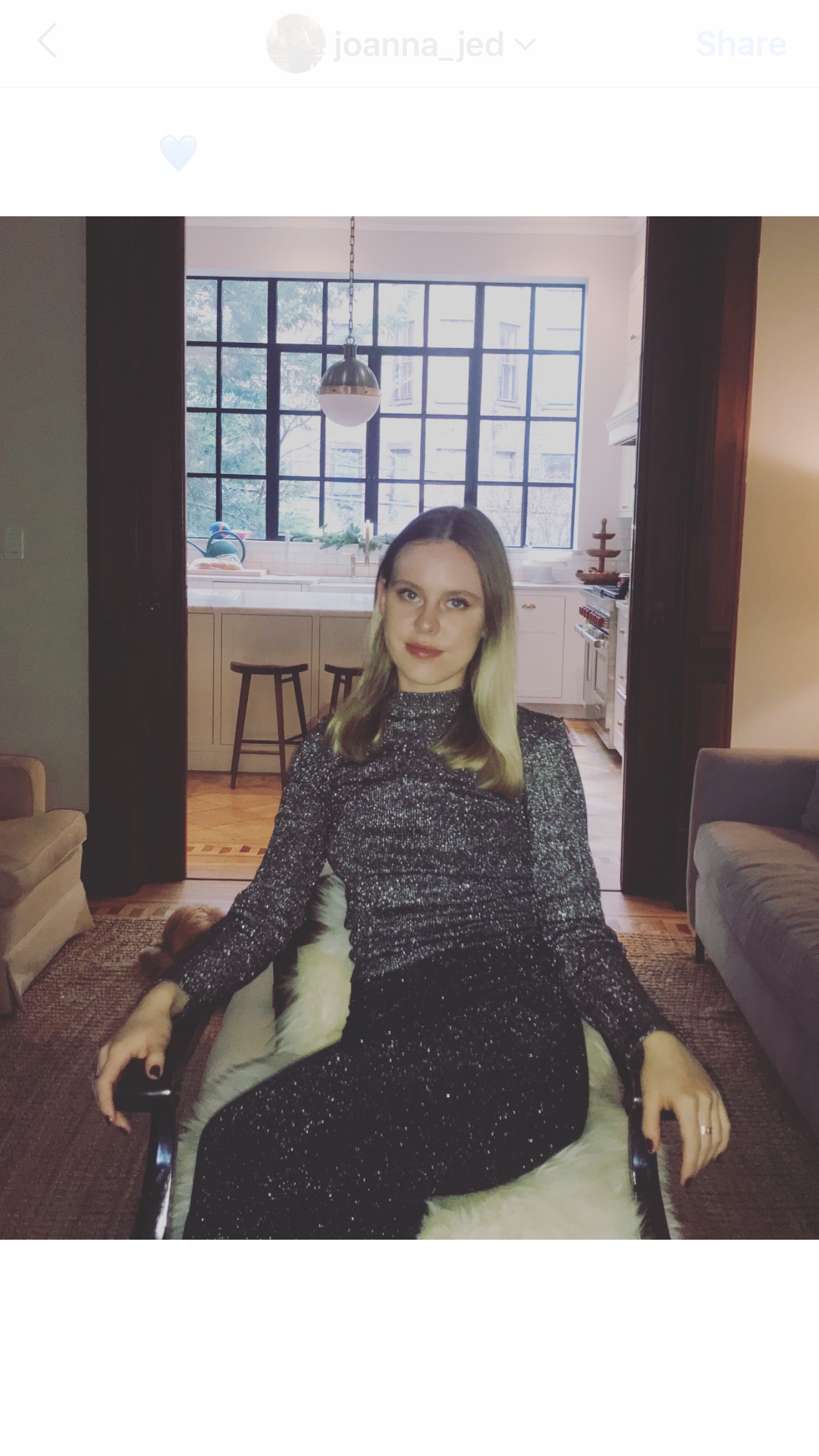
My name is Joanna Jedruszczuk. I’m 21 years old, and a Scorpio. Although my first language is Polish, I’m currently in an elementary Polish class to improve my reading and writing skills. I grew up in Rockaway Beach but went to school in Brooklyn starting in 6th grade, continuing on to high school, so I’m used to traveling. Like a lot of the students here, it takes me about an hour and a half to 2 hours on a regular day to get to Hunter. I am currently in my senior year of college, and am majoring in Psychology with a minor in English.
I have a pug, 2 parrots, bearded dragon, and turtle at home, so it’s safe to say I love animals. When I was little, I wanted to become a veterinarian. But as I got older, I realized it doesn’t just mean saving animals, they die too, so that dream extinguished. I love to travel and am planning a trip to Rome soon. In the future, I want to work in a school as either a school psychologist or guidance counselor. At the moment, I am an Assistant Teacher in an after school program in a classroom of children aged 2-3, but have been in classrooms with ages 4-12, and am always babysitting. I love working with children and am excited for any opportunities to further my knowledge in this area.

Maya Nasser
My name is Maya Nasser and I am currently a senior at Hunter college. I am majoring in Psychology and I am on the pre-med track. Psychology was always one of the things that clicked for me and is something I always had interest in which is why I chose to major in it. Helping and taking care of others is something that I was drawn to from a young age. This is what sparked my interest in being in the medical field. My dreams are to become a Psychiatrist and specialize in drug abuse or trauma and help patients in that field.
I am Lebanese and both my parents were born and raised there. I visit Lebanon often and see my family there. My dad is from the south and my mother is from Beirut. I try to go at least once a year to see my grandparents and other family members, including my younger cousins. Whenever I am there, I feel like I am at home. I can speak, read and write in Arabic as well. This helps me communicate with the family members that do not know English.
Leading a healthy lifestyle is something that is important to me. I workout at least three times a week and try my best to eat healthy. I became more serious about fitness about a year ago. I met a friend at the gym who helped me with my training. It has helped me cope with many things in my life and I always walk out of the gym or boxing classes feeling amazing. Without fitness, I would not have as much energy nor be as happy as I am.
Traveling is something I enjoy doing. Ever since I was younger, my parents exposed us to traveling. I have been to Italy, Switzerland, Turkey, England, Egypt and many other countries. There was a period of time where I hated airplanes because they made me sick. However, that never stopped me from going to where I wanted to go. I still want to travel to Greece, Iran, Spain and Japan and hope to do so in the upcoming years.
Baking is another thing I am fond of. I started baking when I was in high school by trying things out I learned from online. Chocolate chip cookies, my favorite sweet, was the first thing I learned to bake. I moved on to brownies, cakes, cheesecake, and other sweets as well. It is one of my favorite hobbies. Cooking is still something I am working on, but it also interests me.
Part B. Exercise 1, Chapter 1.
Paper Title: Itsy Bitsy Spider…: Infants React with Increased Arousal to Spiders and Snakes
1. What research question did the study address?
This study addresses the research question of whether or not infants show an increase in arousal to ancestral threats, such as spiders and snakes, compared to fear-irrelevant images like flowers and fish.
2. Why is the question important to address?
This question is important to address since there are still prevalent existing fears and phobias for spiders and snakes, regardless of the minimal threat that these animals pose towards humans nowadays. Evidence for arousal in response to snakes and spiders in infant-aged participants would support the notion that an evolved mechanism underlies specific fears of ancestral threats in humans. This would allow for the conclusion that the fear of snakes and spiders is evolutionary and not learned.
3. What was new about the study? How did it fill in gaps in the literature?
Prior to this study, there were only two other studies that tested arousal for ancestral threats in infants. Therefore, the sample that the study used was filling gaps in literature since mainly children and adults were studied. For a change, this study included visuals such as snakes and spiders for the ancestral threats condition and images like flowers and fish for the fear-irrelevant condition. Other literature tested evolutionary fear-relevant sounds such as snakes hissing or angry voices compared to modern fear relevant and pleasant sounds.
4. What are some of the limitations and future directions of the study?
Some of the limitations in this study is that the visual categories should have been be represented more comprehensively. Even though the stimuli were matched in a range of relevant low-level features, the spider and flower stimuli in particular were not perfectly matched in terms of features and complexity, as the use of ecological stimuli was important to the researchers in the current study. Their study had to perform the snake-fish section twice due to inaccurate results being found. They repeated the study but had to create between-participant design instead of the original within-participant design, where one sample would look at only the fish and the other sample looked at only the snake. This change in design allowed them to rule out potential carry-over effects from the infants generalizing snakes with the perceptually matched fish in the study. Future research may address this issue by using a set of stimuli based on schematic illustrations of spider-like vs. not spider-like arrangements of a “body” and “legs” or “petals” (e.g., New and German, 2015). Also, although the researchers deem 6-month-olds unlikely to have been exposed to spiders and/or snakes or experienced direct fear-conditioning or social learning of specific fears, they cannot know for sure that infants included in their study were unaffected in their responses by prior experience.
5. What ideas do you have for future studies?
For future studies, I believe it would be interesting to do a similar study, but this time using people infants are used to seeing versus people they have never seen before when being carried by them. It would be interesting to see whether infants would show an increase in arousal when people whom they are unfamiliar with carry them. The arousal would indicate that they fear strangers, even though being carried is often a comforting feeling for infants. In this study, if the infant fears the stranger or unfamiliar person regardless of the comfort they provide, it could indicate that strangers are an ancestral threat rather than being learned to fear them.
Works Cited and Active Links for Exercise 1, Chapter 1:
Hoehl, S., Hellmer, K., Johansson, M., & Gredeback. (2017). Itsy bitsy spider…: Infants react with increased arousal to spiders and snakes. Frontiers in Psychology: Developmental Psychology.https://doi.org/10.3389/fpsyg.2017.01710
New, J. J., & German, T. C. (2015). Spiders at the cocktail party: An ancestral threat that surmounts in-attentional blindness. Evol. Hum. Behav. 36, 165–173. doi: 10.1016/j.evolhumbehav.2014.08.004 https://doi.org/10.1016/j.evolhumbehav.2014.08.004
-Stephanie Hinck & Diyala Mawad
Part C. Chapter 11 Exercise 3
1.The research summary that was chosen was under the National Association of School Psychologists. It discusses the benefits of students joining emotional learning programs, which included improved grades and test scores compared to a control group. The original article is titled The Impact of Enhancing Students’ Social and Emotional Learning: A Meta-Analysis of School-Based Universal Interventions by Durlak, Joseph A. ; Weissberg, Roger P. ; Dymnicki, Allison B. ; Taylor, Rebecca D. ; Schellinger, Kriston B. The summary is consistent with the original article in terms of the results and how it benefits students. However, the summary did not state how these findings were found and the experiments done to receive these results. The summary also did not have the basic definitions that were used in the original article to explain how they were researching. Everything written in the summary should remain, however there should be things added on. Below is how I would have written the summary in addition to what was already written.
A meta-analysis of school-based social and emotional learning programs involving more than 270,000 students in grades K-12 revealed that students who participated in these programs improved in grades and standardized test scores by 11 percentile points compared to control groups. Social and emotional learning is defined as managing emotions, setting positive goals, understanding others perspectives, maintaining positive relationships, and making responsible decisions. Social and emotional learning (SEL) is hypothesized to help lessen aggression and help prevent substance abuse and other risky behaviors. It was also hypothesized that SEL programs that did not have good implementation of the skills would be less successful. The way that the students would be tested on their SEL would be through self assessments, teacher assessments and family/friend assessments. Their disruptiveness in class would be recorded in class by teachers as well. Researchers also kept track of their grades within their classes. Compared to a control group, there was an improvement overall.
2. The research summary of the article I chose is about how social and emotional learning programming is having a positive effect on students who come from diverse backgrounds through ages ranging from preschool to high school and ranging areas. The article, titled “The Impact of Enhancing Students’ Social and Emotional Learning: A Meta-Analysis of School-Based Universal Interventions” by Joseph Durlak, Roger P. Weissberg, Allison Dymnicki, Rebecca Taylor, & Kriston Schellinger. While generally representative of the article’s findings, the research summary offered no additional information. It would be better for the authors to provide some sort of information like what kind of studies were done, how many, etc. If I were to rewrite the research summary it would be: Several hundred well-designed studies have documented the positive effects of social and emotional learning programming on students of diverse backgrounds, from preschool through high school, in urban, suburban, and rural settings. (Greenberg, Weissberg, O’Brien, Zins, et al., 2003; Zins, Weissberg, Wang, & Walberg, 2004).
3. A research summary that we chose was from the National Association of School Psychologists. The article, “Friendships, Peer Acceptance, and Group Membership: Relations to Academic Achievement in Middle School” by Kathryn R. Wentzel and Kathryn Caldwell addresses that healthy peer relationships anticipate middle school students’ grades both simultaneously and after some time. The summary provided is consistent with the research findings on numerous accounts. It provided the variables of the experiment: healthy peer relationships and students grades. It also specified that the research was done over a period of time. Nevertheless, the research summary wasn’t specific enough on grade differences and how practices influence social and academic proficiency. If I were to rewrite this I would state, a longitudinal analysis with two samples of sixth-grade students was used to develop how healthy peer relationships predict students’ grades. Healthy relationships consist of acceptance and support from others. Extension and limits of relationships were also observed. Behaviors such as prosocial, anti-social, and emotional distress explain significant differences between relationships and academic accomplishments. The results significantly support the conclusion that healthy peer relationships anticipate students’ grades (Wentzel & Caldwell 1997).
Works Cited & Active Links for Chapter 11 Exercise 3:
Durlak, Joseph A., Weissberg, Roger P., Dymnicki, Allison B., Taylor, Rebecca D., & Schellinger, Kriston B. (2011). The impact of enhancing students’ social and emotional learning: A meta-analysis of school-based universal interventions. Child Development, 82, 405. https://www.casel.org/wp-content/uploads/2016/01/meta-analysis-child-development-1.pdf
Durlak, J. A., Weissberg, R. P., Dymnicki, A. B., Taylor, R. D., & Schellinger, K. (2011). The impact of enhancing students’ social and emotional learning: A meta-analysis of school-based universal interventions. Child Development, 82, 405-432. https://onlinelibrary.wiley.com/doi/full/10.1111/j.1467-8624.2010.01564.x
Wentzel, K. R., & Caldwell, K. (1997). Friendships, peer acceptance, and group membership: Relations to academic achievement in middle school. Child Development, 68, 1198-1209. https://www.ncbi.nlm.nih.gov/pubmed/9418234
-Joanna Jedruszczuk, Maya Nasser, Yoleiry Quezada

 Research Methods in Developmental Psychology